If you picture Jacksonville’s urban core as one single downtown, you might miss what makes it so appealing. This part of the city is really a collection of distinct neighborhoods, each with its own housing style, pace, and feel. If you are trying to decide where to start, this guide will help you understand the difference between skyline living, riverfront access, and historic residential streets so you can focus your search with more confidence. Let’s dive in.
Jacksonville’s Urban Core at a Glance
Jacksonville’s urban core works best when you think of it as a group of districts instead of one uniform area. The Downtown Investment Authority identifies eight downtown districts: Brooklyn, LaVilla, City Center, NorthCore, Cathedral Hill, Sports & Entertainment, Working Waterfront, and Southbank.
That matters because your day-to-day experience can look very different from one area to the next. In some parts of the core, you will find condos, lofts, apartments, and mixed-use projects. In others, you will find older detached homes, preserved architecture, neighborhood business nodes, and public parks.
Downtown living also comes with practical perks that shape how people use the area. According to Visit Jacksonville, the core includes more than 43,000 public parking spaces, the free Skyway between the Southbank and Northbank, water taxi service, autonomous shuttle service along Bay Street, and more than 90 restaurants.
Two Main Urban Core Lifestyles
A helpful way to narrow your search is to split Jacksonville’s urban core into two broad living experiences. One centers on downtown mixed-use living, and the other centers on historic urban residential neighborhoods.
If you want a condo, loft, apartment, or newer mixed-use setting close to offices, riverfront amenities, and entertainment, you will likely focus on Downtown, Brooklyn, LaVilla, Cathedral Hill, NorthCore, and Southbank. If you are drawn to older homes, preserved architecture, walkable streets, and neighborhood identity, Riverside, Avondale, Springfield, and nearby San Marco may feel like a better fit.
Downtown Mixed-Use Neighborhoods
Downtown, City Center, and NorthCore
City Center is the most office- and institution-focused part of downtown. The Downtown Investment Authority describes it as home to office towers, government services, regional non-profits, and major arts and cultural centers.
NorthCore is part of the evolving side of downtown. The district is seeing adaptive reuse projects designed to bring in more residential, retail, and hotel uses, which makes it especially relevant if you are looking for an area with continued change and new investment.
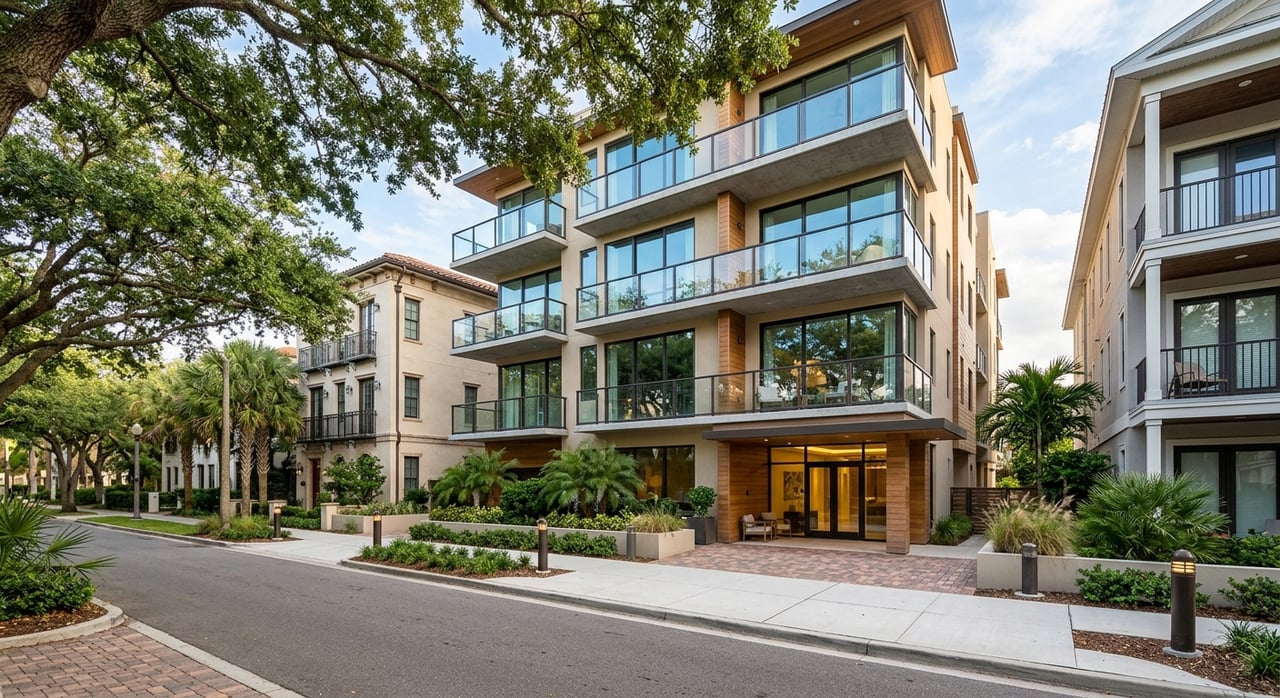
Housing in this part of downtown tends to be urban and infill-oriented rather than traditional single-family. Current downtown materials describe a mix that includes affordable housing, market-rate apartments, high-end rentals, townhomes, and luxury riverfront options. Project listings also point to apartment and loft-style communities such as Lofts at Cathedral, Lofts at LaVilla, and Lofts at Monroe.
Brooklyn
Brooklyn offers one of the clearest examples of newer urban living in Jacksonville. Located west of downtown along the St. Johns River, the district includes riverfront office space, multi-family housing, condominiums, restaurants, retail, and light industrial uses.
For many buyers, Brooklyn stands out because it combines a modern housing mix with easy access to major downtown destinations. Visit Jacksonville notes its proximity to the Northbank Riverwalk, the arena, ballpark, Jacksonville Center for the Performing Arts, and Florida Theatre.
If you like the idea of city living with newer construction, Brooklyn deserves a close look. Public development listings also show continued residential activity, including Lofts at Brooklyn.
LaVilla and Cathedral Hill
LaVilla and Cathedral Hill are important to understand because they are not conventional home-shopping districts in the same way as some of Jacksonville’s older residential neighborhoods. These areas are better described as redevelopment corridors with growing residential presence.
LaVilla is one of Jacksonville’s most historically significant districts. The Downtown Investment Authority describes it as the city’s oldest suburb and a former railroad hub, with redevelopment returning through workforce housing and transportation projects.
Cathedral Hill is also in transition. It is anchored by five historic churches, and a master plan is guiding redevelopment with support for affordable housing, amenities, and continued neighborhood growth.
From a housing standpoint, buyers will generally see more apartments, converted buildings, adaptive reuse, and mixed-use potential here. If you are excited by the idea of getting into an evolving part of the urban core, these districts may be worth exploring.
Southbank
Southbank blends riverfront residential and office towers with major medical campuses and direct downtown access. The Downtown Investment Authority says the district includes Baptist Medical Center Jacksonville, Wolfson Children’s Hospital, MD Anderson Cancer Center, and Nemours Specialty Care.
That mix gives Southbank a more polished, connected feel for buyers who want to stay close to employment centers, riverwalk access, and downtown transportation options. It is one of the strongest choices if you picture an urban lifestyle with tower living and waterfront views.
Southbank also benefits from being directly tied into downtown movement patterns. Between the riverwalk, Skyway access, and proximity to the river, it offers one of the most connected urban experiences in Jacksonville.
Historic Urban Residential Neighborhoods
San Marco
San Marco sits just minutes from downtown, but it offers a different kind of urban experience. Visit Jacksonville describes it as a historic neighborhood with boutiques, art galleries, and a full dining district centered around San Marco Square.
Residentially, San Marco is more established and less tower-heavy than the Southbank. Official and visitor sources highlight older homes and landmark properties, which helps define the area as an urban-adjacent neighborhood with lasting character.
If you want close access to downtown and the hospital campuses but prefer a setting with older homes and a defined commercial core, San Marco can be a strong fit. It feels connected to the city without reading like a pure downtown district.
Riverside and Avondale
Riverside and Avondale are two of Jacksonville’s best-known historic residential districts. Visit Jacksonville describes them as walkable historic districts with unique shopping and dining, while local neighborhood resources point to major landmarks like Memorial Park, the Riverside Arts Market, and Five Points.
The housing stock is one of the biggest draws here. City preservation guidelines say the district includes Colonial Revival, Tudor, and Bungalow styles. More than 60% of houses in Riverside are bungalows or show bungalow influence, while Avondale is known for more formal two-story homes and a strong concentration of Colonial Revival, Mission, and Tudor architecture.
This is the part of the urban core to explore if you are looking for historic detached homes instead of condo living. Riverside and Avondale also have a strong public-space identity, with 26 parks covering more than 75 acres in the historic district.
Springfield
Springfield is Jacksonville’s best-known historic district north of downtown. City guidelines describe it as a neighborhood made up mainly of wood-frame residential buildings, with additional masonry commercial, religious, educational, and civic structures.
The district’s contributing buildings date roughly from 1885 to around 1930, and its layout is tied to Hogans Creek and a regular street grid. Visit Jacksonville highlights restored mansions, bungalows, murals, and locally owned businesses, which helps explain why Springfield feels both historic and actively evolving.
Architecturally, Springfield offers impressive variety. Official sources identify Frame Vernacular, Masonry Vernacular, Bungalow, Colonial Revival, Queen Anne, Prairie, and Mediterranean styles, giving buyers a wide range of home character within one district.
If you are drawn to preservation-minded neighborhoods with visible architectural history, Springfield is one of the urban core’s most distinctive options. It is especially appealing if you want a historic home search that feels neighborhood-focused rather than tower-focused.
How to Choose the Right Fit
If you are early in your search, it helps to ask a simple question first: Do you want a downtown lifestyle or a historic neighborhood lifestyle? That answer will usually narrow your options quickly.
A downtown lifestyle may be right for you if you want:
- Condos, lofts, apartments, or newer mixed-use housing
- Close access to riverfront amenities and entertainment
- Easier access to downtown transportation options
- A setting shaped by offices, events, and adaptive reuse
A historic neighborhood lifestyle may be right for you if you want:
- Detached homes with architectural character
- Established residential streets
- Neighborhood business districts and public parks
- A preservation-oriented setting with older housing stock
A Practical Note on Historic Homes
If a property is located in a local historic district, Jacksonville requires a Certificate of Appropriateness before exterior changes begin. That is an important detail to keep in mind if you are considering updates after closing.
The city also says owners of locally designated historic properties may qualify for a Historic Preservation Property Tax Exemption after an approved rehabilitation project. For buyers, that means historic homes can come with both preservation requirements and potential tax advantages.
Why Local Guidance Matters
Jacksonville’s urban core is not a one-size-fits-all search. One street may point you toward lofts and river views, while another may lead you to a bungalow, a historic park, or a mixed-use corridor with long-term redevelopment potential.
That is where local perspective becomes valuable. When you understand how these neighborhoods differ in housing stock, layout, and daily lifestyle, you can spend less time guessing and more time focusing on the areas that truly match your goals.
If you are thinking about buying or relocating in Jacksonville, Leslie Smith can help you compare neighborhoods, narrow your search, and move forward with clear local insight.
FAQs
What areas are included in Jacksonville’s urban core neighborhoods?
- Jacksonville’s urban core includes downtown districts such as Brooklyn, LaVilla, City Center, NorthCore, Cathedral Hill, and Southbank, along with nearby historic urban residential neighborhoods like San Marco, Riverside, Avondale, and Springfield.
What is the difference between Downtown Jacksonville and Jacksonville’s urban core?
- Downtown Jacksonville is part of the urban core, but the urban core is broader and includes multiple districts and nearby historic neighborhoods with different housing types and living experiences.
What type of housing is common in Downtown Jacksonville neighborhoods?
- Downtown-oriented neighborhoods like City Center, NorthCore, Brooklyn, LaVilla, Cathedral Hill, and Southbank tend to have condos, apartments, lofts, townhomes, mixed-use projects, and riverfront residential options rather than large numbers of detached single-family homes.
Which Jacksonville urban core neighborhoods are best for historic homes?
- Riverside, Avondale, Springfield, and San Marco are the strongest options if you want older homes, preserved architecture, and established residential streets within or near the urban core.
What should buyers know about Jacksonville historic districts?
- Buyers should know that exterior changes on locally designated historic properties require a Certificate of Appropriateness, and some approved rehabilitation work may qualify for a Historic Preservation Property Tax Exemption.
Is Jacksonville’s urban core easy to get around?
- Downtown Jacksonville offers several mobility options, including the free Skyway between Southbank and Northbank, water taxi service, autonomous shuttle service along Bay Street, and a large supply of public parking.