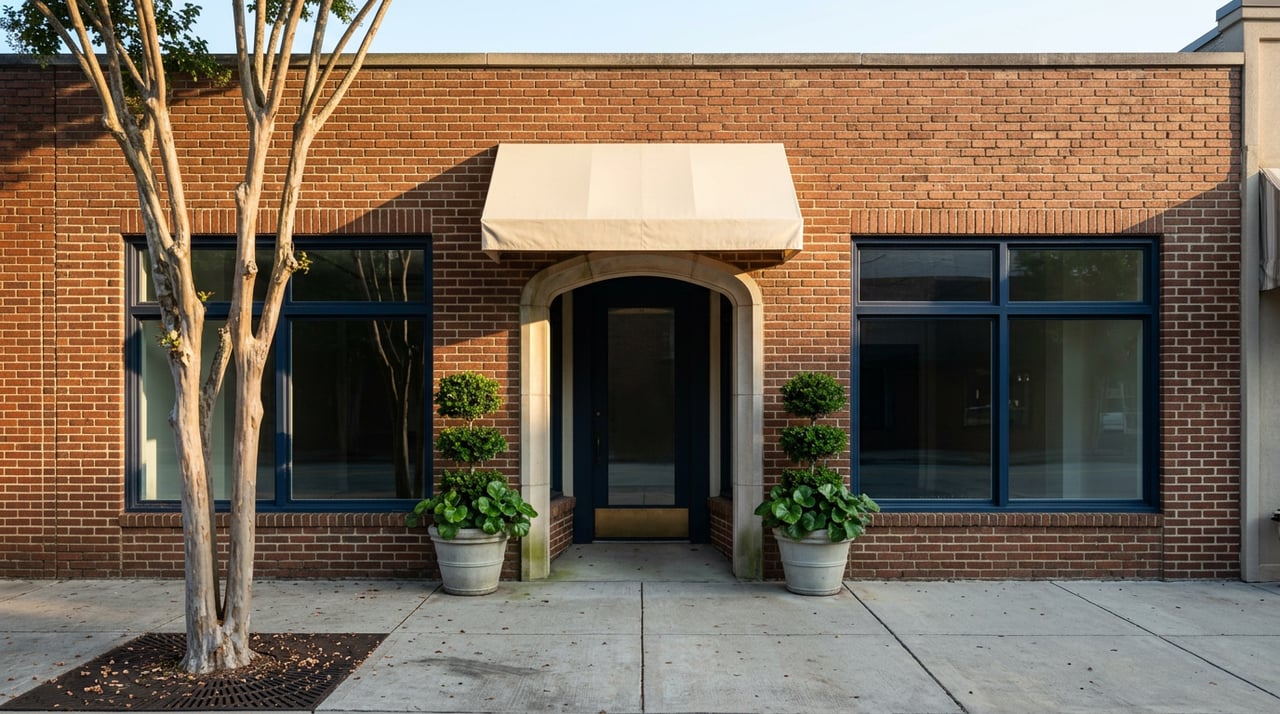
For as long as anyone in Riverside can remember, King Street has run on one clock: happy hour to last call. Kickbacks, the breweries, the late-night sandwich counters. If you wanted a reason to be on that stretch before 5 p.m., you mostly didn't have one. That's changing this year, and not because a developer decided the corridor needed a makeover. It's changing because a handful of small businesses quietly filed permits for things that have nothing to do with a pint glass.
The bigger headline this month is a $6.2 million property sale at the corner everyone calls Park & King. But if you actually live in Riverside and walk this stretch, that sale is the least interesting thing happening here. The interesting part is what's opening around it while the deed changes hands in the background.
The Daytime Gap Everyone Already Knew About
Cafecito, a coffee shop that was preparing to move into King Street as of this spring, exists to solve one specific problem: there's almost nowhere to sit down with a laptop or a friend before the bars open. According to reporting picked up by Hoodline, the shop will serve locally roasted coffee alongside Japanese matcha, aimed squarely at remote workers, nearby hospital staff, and neighbors who want a reason to linger on the block that isn't a beer list. The reporting traces the idea directly to the corridor's late-night reputation: King Street built its identity on breweries and bars, and that left mornings and early afternoons close to empty.
That's not a knock on the corridor. It's just math. A strip built for 6 p.m. onward doesn't automatically work at 9 a.m., and nobody had bothered to test whether it could. Cafecito is the test.
A New Kind of Bar That Isn't Really About Alcohol
The second daytime-facing addition is easy to miss because of its name. A build-out permit was issued for Riverside Kava Bar LLC at 1269 King Street, covering roughly 1,200 square feet at a project cost of about $51,200. Kava, for anyone who hasn't tried it, is a non-alcoholic root drink that's become popular as a social alternative to a beer or a cocktail, and kava bars tend to keep hours that stretch well outside the traditional 5-to-close window.
Put those two openings side by side and you get a pattern instead of a coincidence. Neither business is trying to out-brewery the breweries. Both are betting that King Street has room for something in the hours the bars aren't using.
The Corner That Sold Twice Without Losing Its Anchor
Meanwhile, the property that anchors the whole district just changed hands for the second time in three years, and almost nothing about what you'd actually find there changed with it.
In 2023, a family trust sold Park & King to Alakai Capital, an Orlando firm, for $4.6 million. Over the following three years Alakai made capital improvements and signed three new leases, according to a LinkedIn post from Sam Middlekauff, the Colliers Urban Division associate vice president who brokered that original sale. On August 20, 2026, Alakai sold the property to Cuadra Capital, a Charlotte, North Carolina investment firm, for $6.2 million, financed with a $5.1 million mortgage from United Bank in Charlotte. Middlekauff summed up the sale simply: "Same Corner, New Chapter."
Here's what actually matters if you live nearby: Park & King is still anchored by Don Eduardo Cocina Mexicana, the same restaurant that's been the draw at that corner through both sales. The one real casualty is BOTE Jacksonville, which has permanently closed, according to its own Facebook page, per Jax Daily Record's coverage of the sale. That closure appears to be its own business decision, not a condition of the sale. The site itself covers about half an acre, 18,556 square feet of land across two parcels, and holds a 14,949-square-foot building constructed in 1942 at 2665 Park Street. Colliers' team is staying on to lease it under the new ownership.
The lesson here is worth sitting with if you've ever assumed a big property sale means your lunch spot is about to disappear. In this case, two ownership changes in three years produced a stable anchor tenant, three new leases, and one closure that had nothing to do with the transaction. The deed moved. The sidewalk mostly didn't.
What's Actually Arriving Along the Riverfront
Not everything new on this stretch is about filling daytime hours. Some of it is aimed squarely at evenings and weekends, just in different forms than the King Street standby.
- Norikawa, a Japanese restaurant from Pearl Hospitality Group, has been in the pipeline since a lease was signed in 2025 for space at One Riverside along the Riverwalk, near where McCoys Creek meets the Emerald Trail. As of this summer the project was still working through city permitting rather than construction, so if you've been waiting for an opening date, there isn't a confirmed one yet.
- 1928 Cuban Bistro is converting the former Tossgreen space at 501 Riverside Avenue, Unit 107, into its eighth Northeast Florida location, after owner Rebecca Gonzalez announced the plans last fall.
- The Hub Brooklyn, a mixed-use project at 400 Riverside Avenue where it meets Forest Street, was nearing completion earlier this year and will anchor Southern Grounds coffee, a rooftop Sky Bar, and Alder & Oak, a wood-fired restaurant from Southern Grounds owner Mark Janasik.
None of these are King Street businesses in the strictest sense. They're a few blocks over, closer to the river. But they're part of the same story: a corridor that used to have one mode is developing several.
The Saturday Ritual Getting a Permanent Backdrop
If you want proof that Riverside already knows how to do daytime well, you don't have to wait for a new business to open. It happens every Saturday under the Fuller Warren Bridge, where the Riverside Arts Market has run for years, drawing more than 4,000 visitors a week to a riverfront amphitheater that seats 350 for live music, alongside local farmers, artists, and makers. It's produced by Riverside Avondale Preservation, the same neighborhood nonprofit that shows up repeatedly in the corridor's other recent projects.
That's not a coincidence either. Riverside Avondale Preservation, JEA, the Environmental Protection Board, PNC Foundation, and the design firm Haskell recently backed a 90-foot mural called Abundant Waters, painted by Jacksonville artist Patrick Maxcy on the JEA pump station right beside the market, depicting the wildlife of the St. Johns River above and below the waterline. It's a privately funded, publicly visible bet that the market's home base deserves permanent art, not just weekly foot traffic.
Put together, the mural and the market tell you something the new storefronts can't: the neighborhood's institutions are investing in what already works, at the same time small businesses are testing what doesn't exist yet.
What It Adds Up To
None of this is a story about King Street becoming a destination. It's a story about a corridor filling in its own gaps, on its own schedule, mostly through decisions too small to make a headline on their own. A coffee shop here. A kava bar permit there. An anchor tenant that survives two ownership changes. A mural next to a market that was already popular before anyone thought to paint the wall beside it.
If you've lived here a while, you probably felt the daytime gap before anyone wrote about it. Now you know why it's finally closing, and which parts of the corridor's recent news actually touch your routine and which parts are just paperwork upstream.
Jacksonville's neighborhoods change in these small increments more often than they change all at once, and reading them accurately takes the kind of attention that comes from watching a specific block for years, not scanning a headline once. That's the same lens Leslie Smith brings to every corner of Clay County and Jacksonville she covers, whether the news is a mural or a mortgage. If you're curious what a corridor like this actually means for your own plans, schedule your free neighborhood consultation and we'll walk through it block by block.